
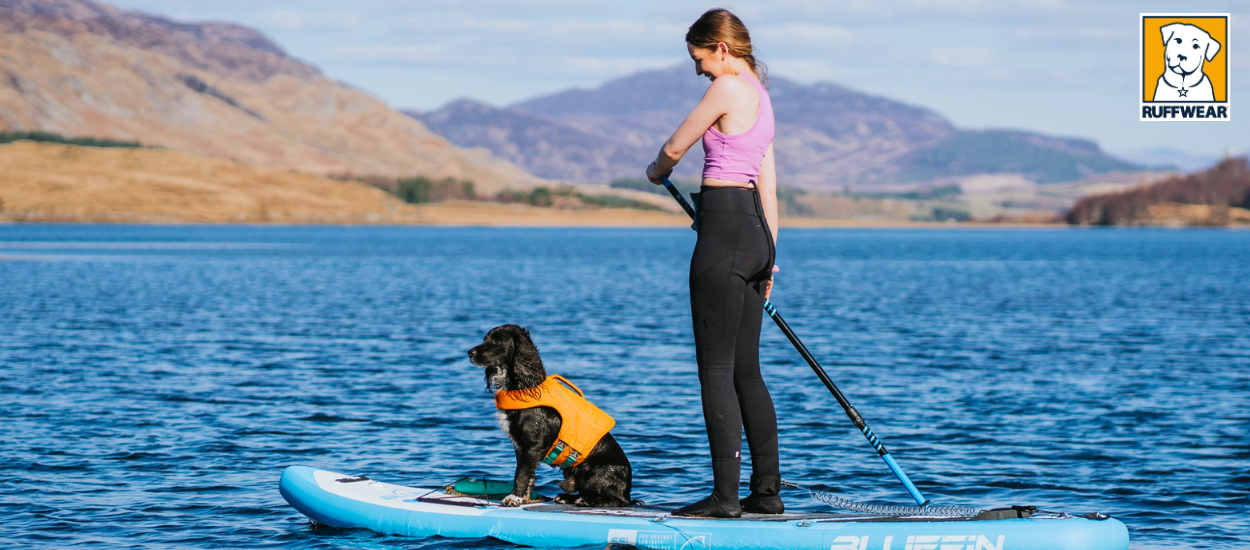
Paddleboarding with Dog
Paddleboarding with a dog for beginners
EQUIPMENT YOU'LL NEED
A board and a paddle:
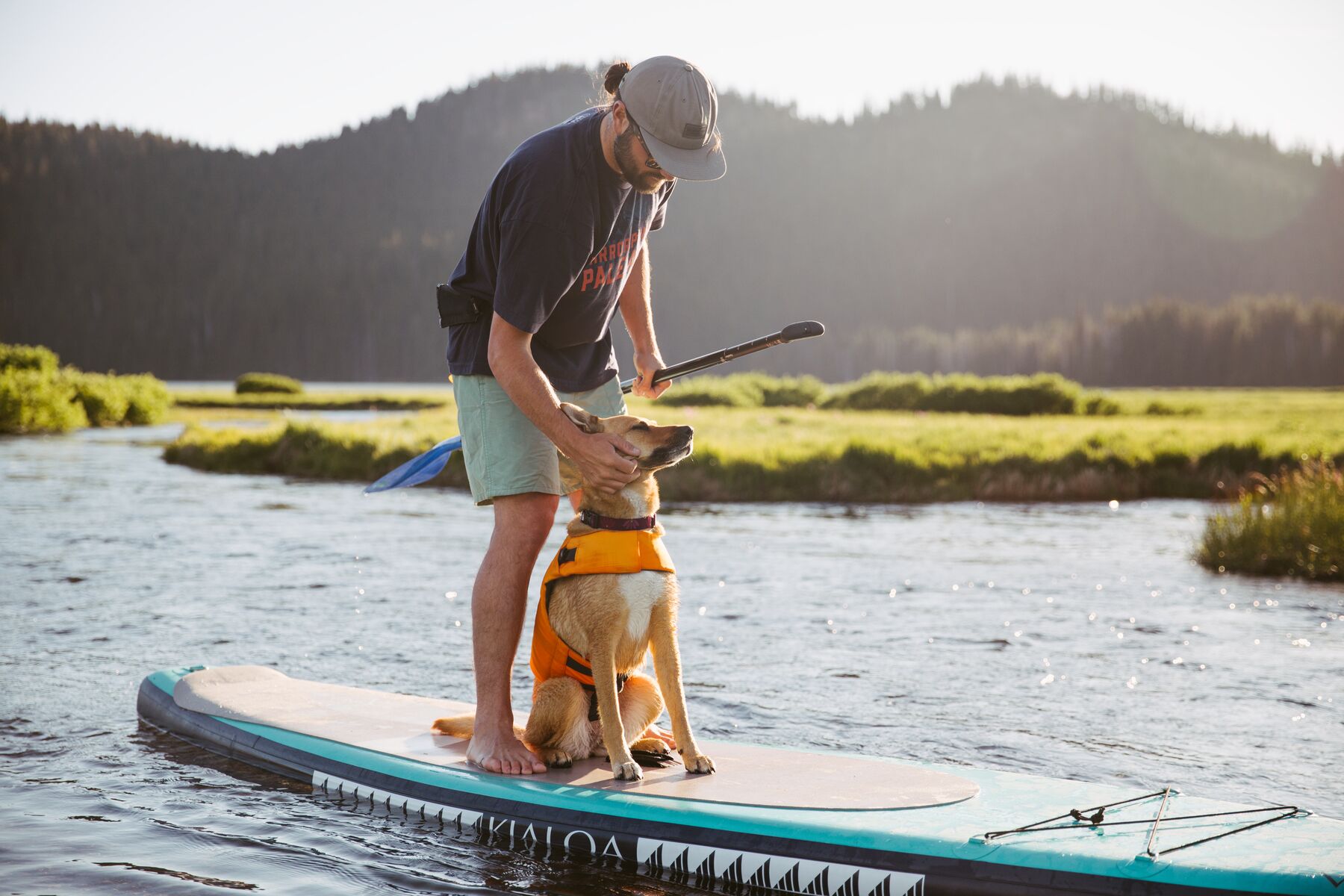
Inflatable paddleboards are ideal for stand-up paddling with your dog. Compared to a hardboard, dog paws have a better grip on the surface of inflatable ones, and their claws leave fewer marks. Wider boards are generally more stable and therefore great for beginners (both humans and animals) who want to build trust and balance together on the board.
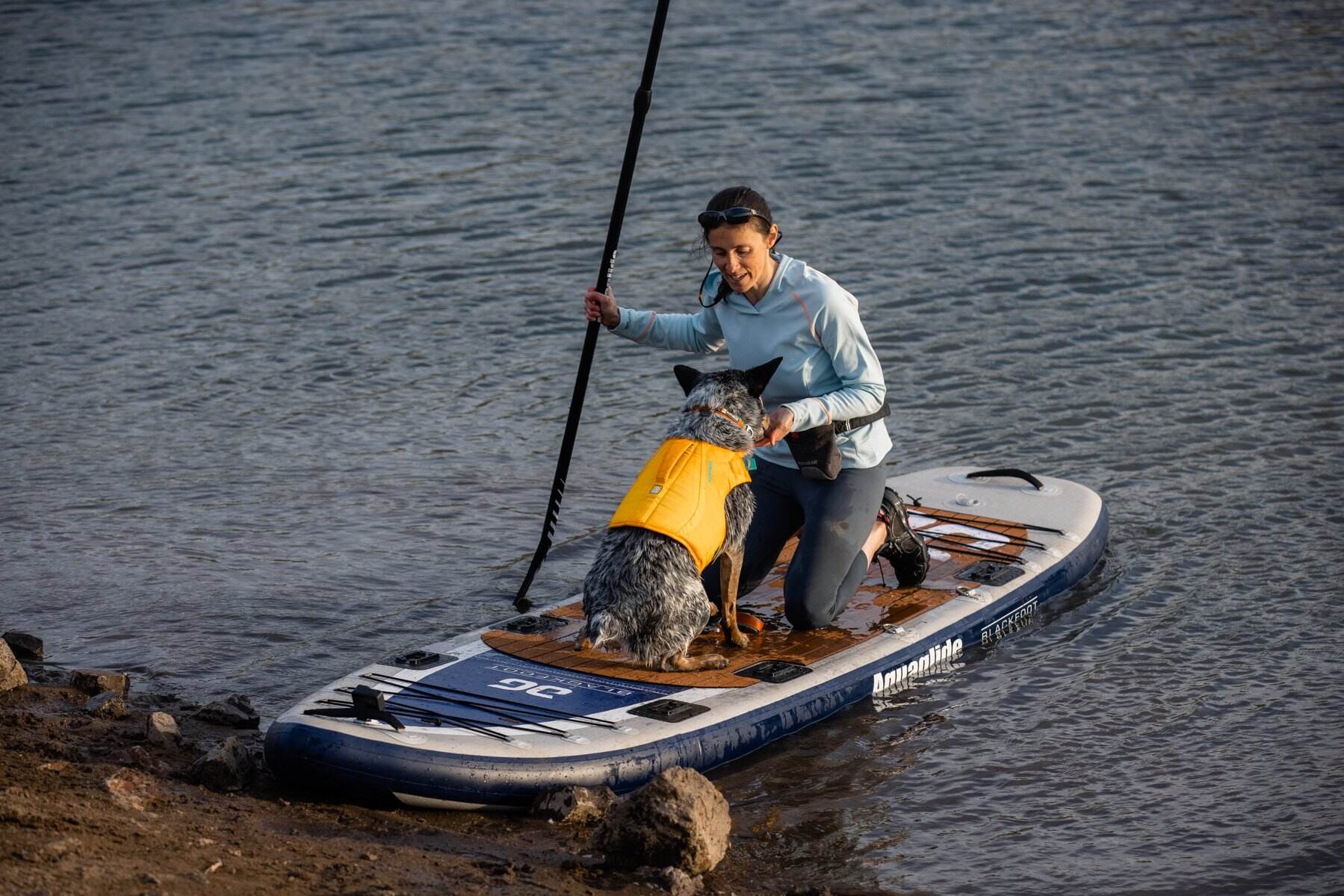
Borrowing or renting a board to start with is a good idea. Once both you and your dog have embraced the life of a SUP athlete and committed to the sport, you'll easily find a suitable board at your local SUP store.
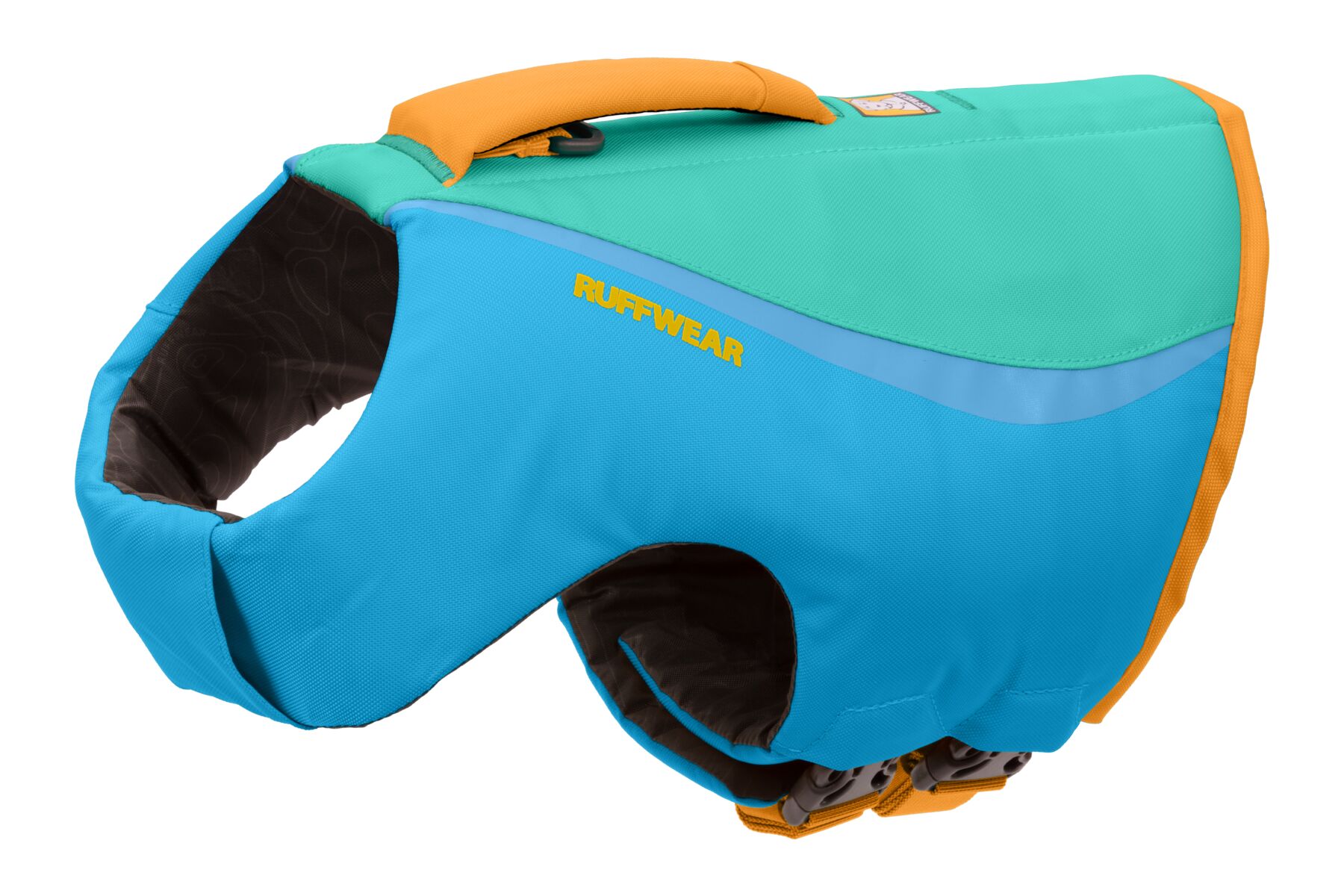
PFDs, Personal Flotation Devices for humans and dogs:
The Float Coat™ life jacket from Ruffwear supports your dog while swimming. But more importantly, the handle and general design of the lifejacket make it easier for you to quickly get your canine buddy onto the SUP.
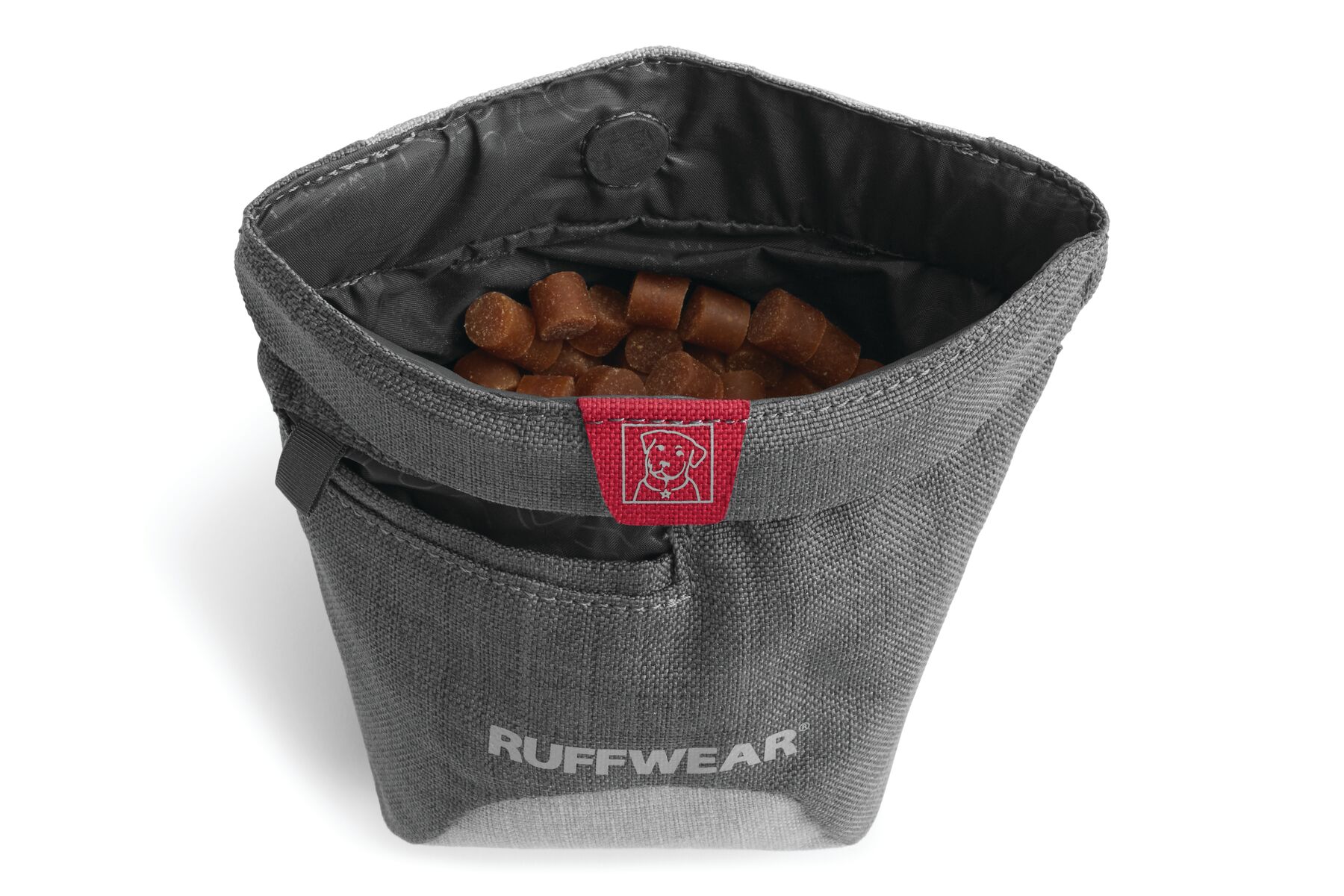
For positive vibes and high fives:
The Treat Trader™ treat pouch , worn around the hips, is perfect for storing a supply fof your dog's favourite treats. This allows you to reward your dog as soon as he masters something new.
Not thrown off balance:
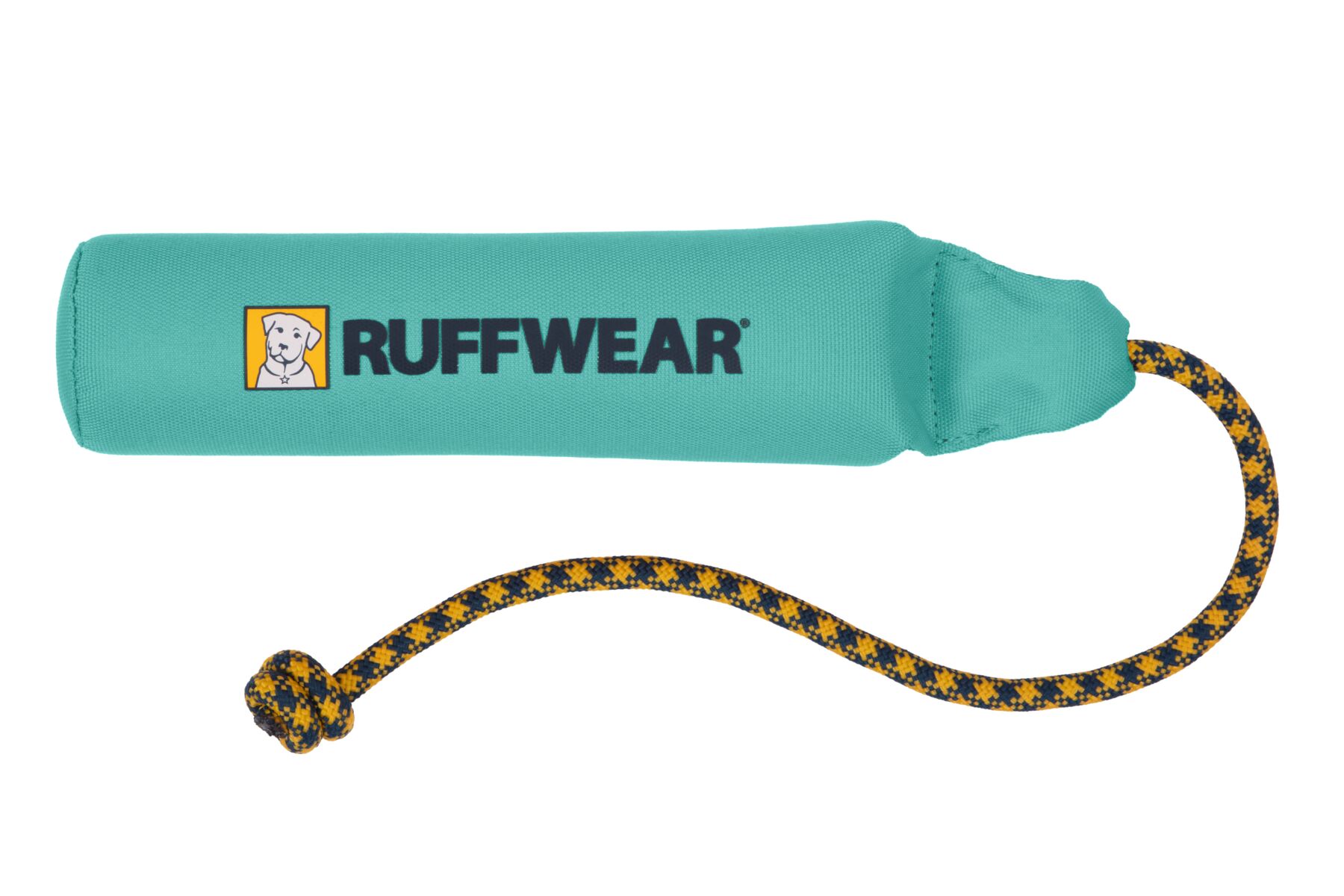
Sitting on a wobbly board isn't easy for some dogs. A fun little game with the floating Lunker™ helps before you get on the board or when you take a break.
HOW TO YOU GET YOUR DOG BACK ONTO THE BOARD
Knowing how to get your dog back on the paddleboard is crucial when stand-up paddleboarding. Maria has broken this challenge down into smaller steps below. This will help you practice together, so you'll know what to do as soon as your dog tries to swim and goes under.
You shouldn't have to lift your dog onto the board. To do it correctly, use the handle on the lifejacket to take on just a little of your dog's weight and then just guide its natural movements.
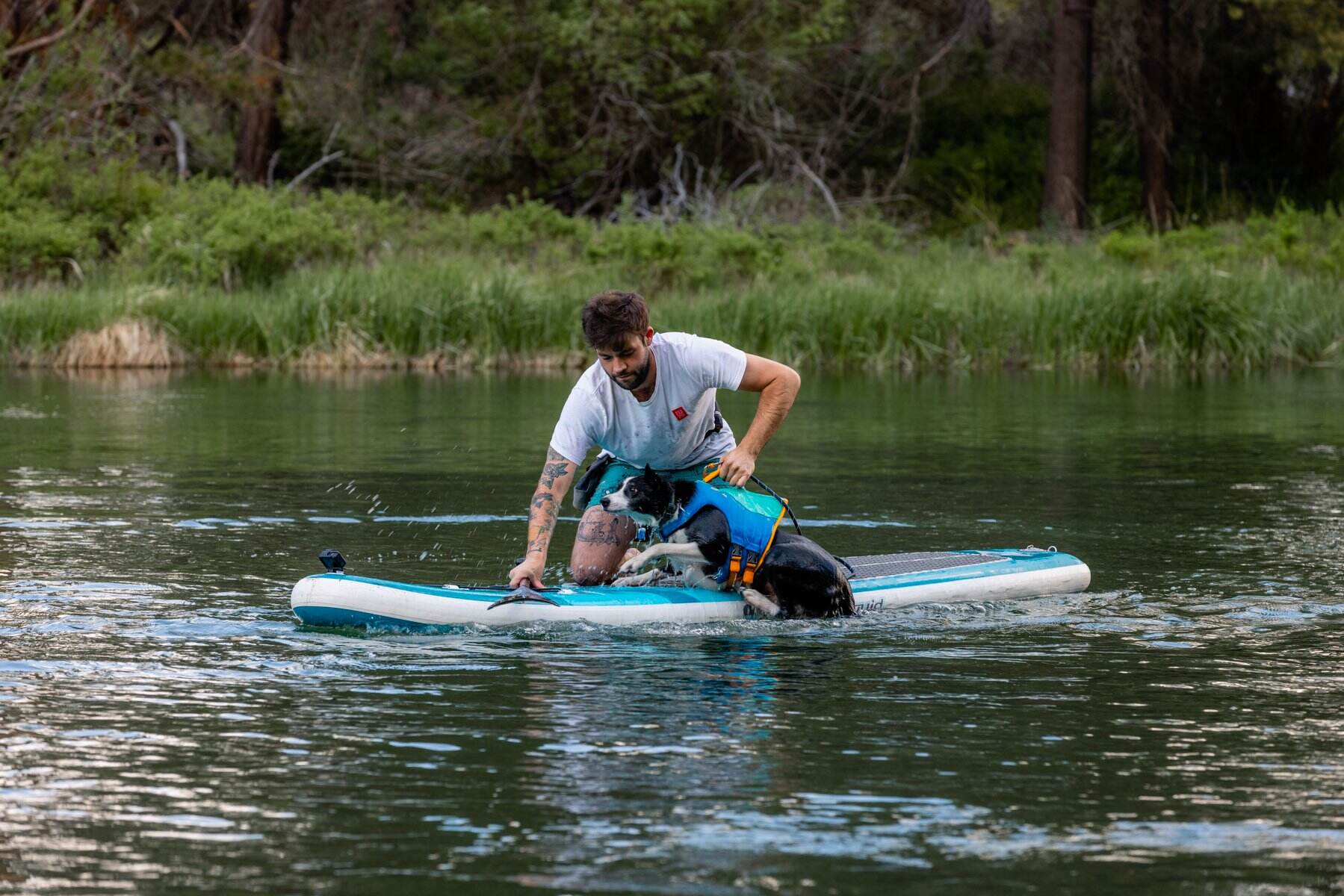
- Make sure you are in the middle of the SUP board.
- Hold your dog in front of you so that its body is at a 90° angle to the board and its head is facing directly onto the board.
- Grab the handle located on the back of the life jacket.
- Your dog will want to climb directly onto the board with his front paws. As soon as he gets into position, gently pull him towards the board with a small jerk so that he gets a hind paw on it.
- Once he has his weight on his hind paw, he can do the rest himself, but don't let go of the handle until all four paws are on the board.
- Warning, cold shower ahead! All dogs get water out of their fur by rapidly shaking. This means you should get up only after your dog has shaken the water off!
- Praise your dog. It's not a big deal if your dog falls into the water. Instead, always praise him for swimming back to the board.
TOP 10 TIPS FOR STAND-UP PADDLING
Maria Christina Schultz, Ruffwear ambassador and author of "How to SUP with Your Pup", has 10 valuable tips for stand-up paddling with your dog.
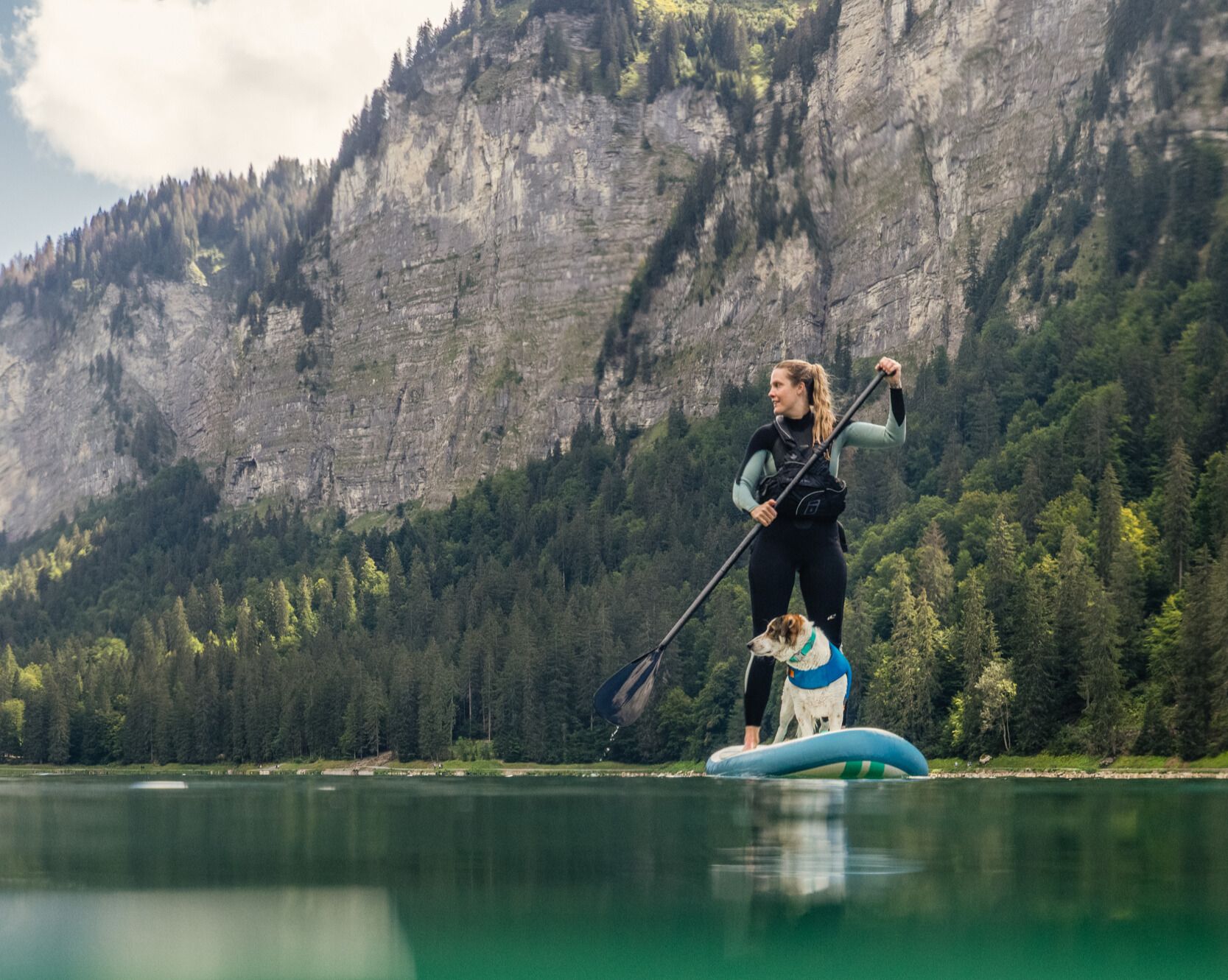
Your dog should wear a life jacket at all times.
There are many theories about why dogs should wear life jackets on the water. While stand-up paddling, a handle on the life jacket is important because it provides a way to get your dog back onto the board. Furthermore, water-loving dogs can tire quickly and not realise they no longer have the strength to swim back to the board. It's also possible that you and your dog could become separated, and a brightly coloured jacket will help you or your fellow SUP enthusiasts identify your dog in the water faster.
Leave the line ashore
This is a tricky subject. SUP instructors teach beginners to always use a SUP leash because it connects them to their most buoyant object - the board. Unfortunately, dogs must be kept on a leash in most water parks. But the dog's leash can easily get tangled with the SUP's safety line. Or it could fall into the water and get caught on something, potentially pulling the dog off the board. It really comes down to judgment. If you feel safer with your dog on a leash, attach it to your life jacket and position yourself so the leash isn't around the dog's neck. This way, you can quickly release your dog if necessary. Also, be sure to check the water conditions and rules in your area.
Keep claws short
Trim your dog's claws and excess fur between their paw pads before getting on the SUP board. This reduces scratches on the board and prevents your dog from slipping.
Extra support is important
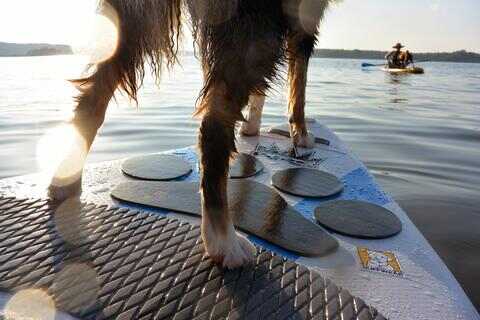
Most boards, especially hardboards, are very slippery. Therefore, an additional pad can make it safer for your dog. Several options are available, such as additional deck pads, rubber bath mats, or a deck traction pad for dogs.
Young and energetic dogs should be given some exercise before SUPing.
No matter how much you train, sometimes it's hard for your dog (especially an energetic one) to relax on the board. Bring a water toy, like the Lunker™ or the Hydro Plane™ , and play for a while before you get on the board. Swimming is great exercise and helps your dog cool down.
Always take some treats
Never stop training and praising your dog for good behaviour. Take some treats with you and reward your dog when he sits correctly on the board and behaves well.
Practice makes perfect
Fall off the board on purpose to practice getting back on. It's not easy to get a dog back on the board, so practising a few times will show you what to expect!
Don't forget to take water!
Both of you will need plenty of water to stay hydrated when out on your SUP under the blazing sun. The sun's reflection off the water can quickly dehydrate you both. A hydration pack is a great option; it allows easy access to water, plus the water stays a little cooler inside the pack. A collapsible water bowl, such as the Quencher™, is an invaluable accessory, as it is lightweight and folds up easily.
Important: Take a first aid kit with you
Whenever you plan a long day trip, packing a small first-aid kit is essential. A lot can happen while your dog is with you - from heatstroke to scraped paw pads. Having a few supplies on hand can make all the difference until you can get back to shore. There are several first aid books for dogs available for purchase. These are excellent references for emergencies, and you should always have one at hand.
Predict the jump into the water
If a dog unexpectedly jumps into the water, it will naturally cause the SUP board to be set into motion. And usually, anyone else on the SUP board will be tipped into the water as well. As you approach the shore, get into a safe position and kneel on the board. Sometimes, dogs can get very excited when it's time to go back to land. Kneel on the board when you're about 5 metres away from the shore.
Related products
-
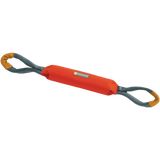
Ruffwear Pacific Loop Toy Sockeye Red
- Great grip
- Material: Nylon
- Length: 52 cm
Magazine Articles:
-
Austria: Free standard delivery from € 54,90
-
Free
returns -
24-hour shipping
More than 9.750 products